Tuesday, 27 October 2015

Essay Tutorial with Krzysztof

I began by trying to explain my work and ideas to Krzysztof. I enjoy working with both the human body and with portraiture. I am interested in the movement of the body and also ways in which medium can be used to recreate this movement. I am also interested in Aesthetics and Anti-Aesthetics as a potential subject for my essay.

Oskar Schlemmer: Bauhaus - about the shape and movement of the body, resemblance to bodies.


Anthony Gormley:


His sculptures are his most well known pieces, however I was particularly drawn to his drawings.

Defocused. Problematised 


Helen Chadwick: 
Meat Abstract #8, 1989

Anti-aesthetics. Weird.


Viral Landscapes 2, 1988-89

Horrible, or something exquisite.
Julian Opie:


Idea of a perfect portrait. Perfect skin tone is when it is all one colour, flawless.

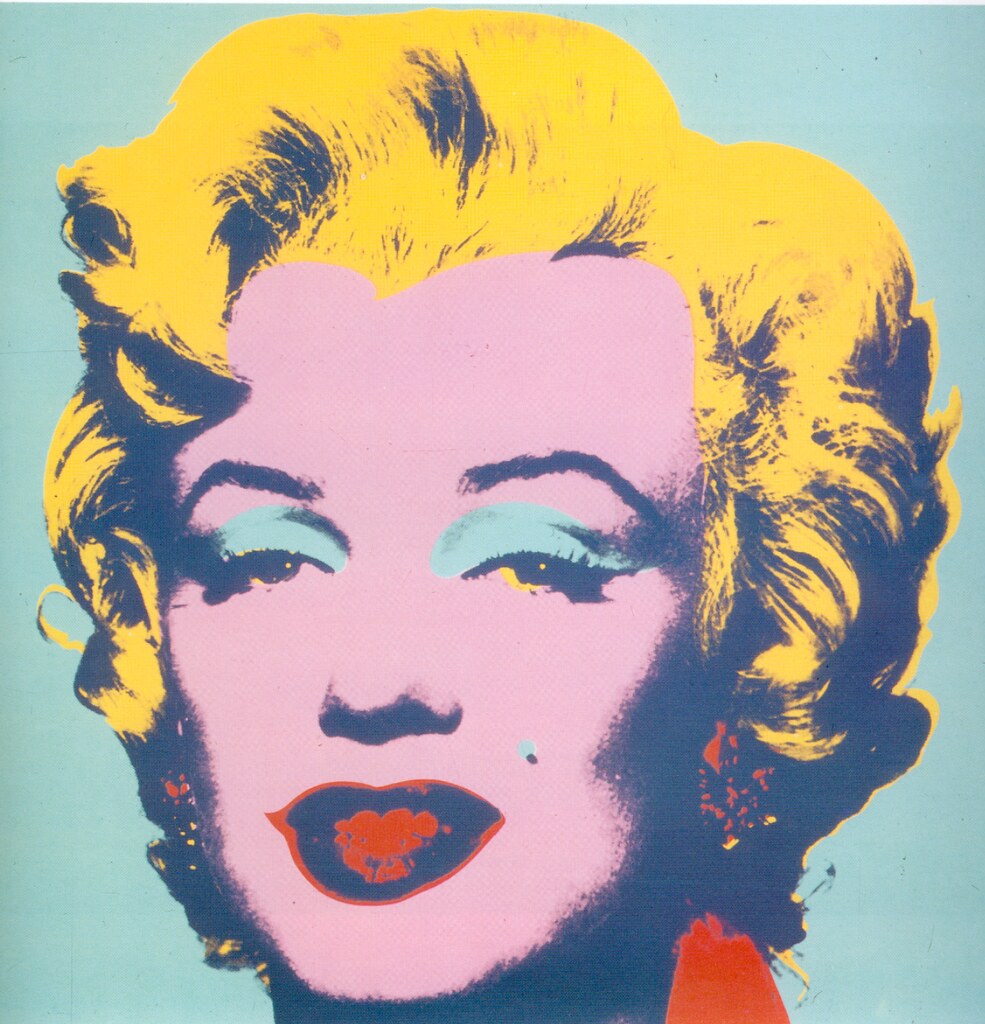
Andy Warhol: glamour, celebrities, perfection, beauty

Marilyn, 1967

Vanessa Beecroft:

Doll-like


Thursday, 22 October 2015

The Body in Contemporary Art, Sally O'Reilly


"seems improbable that there is any art that does not involve the body, since making art and relating to it are rooted in the material world of encounter... our body is our interface with the world, and our senses its line of communication.. even the most dematerialized, conceptual work must take the body into account in some way."

production, reception and interpretation of art
topic been reappraised over the last two decades 
re-emerging as a credible subject
important body-orientated work of the feminists in the 1970s 
"readmittance of humanism into art has validated the body's appearance once more"
"In popular culture the body has become more visible as a challenge to constricting social codes"
"the body has become recognized as the principal arena for the politics of indentity, as well as a facilitator and marker of belonging"
"the boundary between the human body and the world at large is blurred and shifting, and often difficult to identify. It is not simply the physical barrier of the skin, since this would overlook both the psychological sphere that exists beyond our basic corporeal boundaries and the reciprocal relationship between self and context."
"we must consider nature - the fabric of the world that appears to exist beyond human conciousness and control"
"we should reflect on technology as a product of human endeavour, which in turn affects how we conduct ourselves and perceive others."


Tuesday, 20 October 2015

BEAUTY, Documents of Contemporary Art, edited by Dave Beech


Art and the Politics of Beauty:

Introduction

"Beauty and art were once thought of as belonging together.. however neither have come through avantgardist rebellion and modern social disruption unscathed. Their special relationship has, as a result, become estranged and tense." The connection between art and beauty has been challenged in the modern era and they are now somewhat alienated from each other and seen as entirely different fields.

Feminist critique of beauty: how the social status of women depends on and is defined by beauty.

"Beauty is often said to be impossible to define on account of the subjective nature of judgments of pleasure and taste." because beauty is subjective it is difficult to clarify one meaning. The subjectivity of beauty has not changed however modern thinking has made it even more difficult to define. (Marx and Freud)

Marx, Freud and Nietzsche develop "hermeneutics of suspicion". Hermeneutics is 'the branch of knowledge that deals with interpretation'. in which "beauty becomes not only subjective but controversial. In other words modernism introduces a politics of beauty."
"This collection (referring to this book) has been put together with the politics of beauty in mind. It is not devoted solely to beauty, as if beauty could be isolated like a botanical specimen from the social and political world, but rather an exploration of beauty's full relationship to the legacies of modernism and avantgardism, the rejection of beauty and the subsequent recent disavowal of that rejection." (Disavowal is 'the denial of any responsibility or support for something.) Modernism introduced politics to beauty and therefore beauty cannot be isolated, as is now completely submerged and involved in the social and political world.

"avant-garde movements such as Dada and Surrealism and the neo-avant-garde such as Minimalism and Conceptualism, recast beauty as ideologically complicit with political power, while simultaneously cultivating a sensitivity to the repressed value of ugliness, philistinism ('indifferent to culture and the arts'), shock or abjection (a feeling of depression)."

"the controversy about beauty appears to boil down to rival tastes, with traditionalists preferring order and beauty, while avant-gardists prefer disorder and shock."
"but under the surface there is another controversy about the very nature of beauty as a category of experience."

"two contradictory conceptions of beauty: one is that it is a purely private, subjective experience; and the other is the notion that it is always, inevitably socially inscribed." Subjective - opinion varies between each viewer. OR inscribed in society? what is viewed by society as a whole as beautiful. Consistent throughout society.

"draws out the tension between individual experience and the social structure."

"to see beauty as politically loaded is to brand private, subjective likes and dislikes as unintentionally but inextricably caught up with social codes and social divisions."

"competition, rivalry, antagonism, instrumentality and exploitation are characteristic of the salient structural relations of contemporary society... beauty gets tied up with design, style and marketing. Losing it's innocence in this way, beauty becomes to feel saccharine or even violent. This is why, for instance, modernism either eliminated (as in Cubism, Expressionism, Dada and Surrealism) or streamlined (as in Constructivism, Purism, Minimalism).

"with modernism... we have a new category of experience, the suspiciously beautiful." intriguing

"The avant-garde penchant for 'shock' simply could not have taken place if it did not at the same time subvert existing views of the beautiful." (penchant - liking or tendency to do something)
"The Dada, Surrealist or Constructivist gesture could not cause discomfort for the cultural and social elites if it presented its radicalism according to the taste of those very elites." to create an impression, it had to be controversial and unique.

"Beauty has become utterly contentious. Against this, the revival of beauty typically wants to place the individual in an unmediated, untroubled and de-cluttered relationship to the beautiful object."..."the controversy over beauty reasserts the modern dilemma that pits the individual against society by assuming (or insisting on) the individual's autonomy." (contentious - controversial, cause an argument) (autonomy - freedom from external influence, independence)

"Various ambitious contemporary artists have taken pleasure and critical purchase from the confusion and collapse of the distinction between beauty and... antonyms" (ugliness, the banal, ideology, chaos etc)
Other significant artists: Tomoko Takahashi, Liam Gillick, Jeff Koons, Pipilotti Rist.
Takahashi:
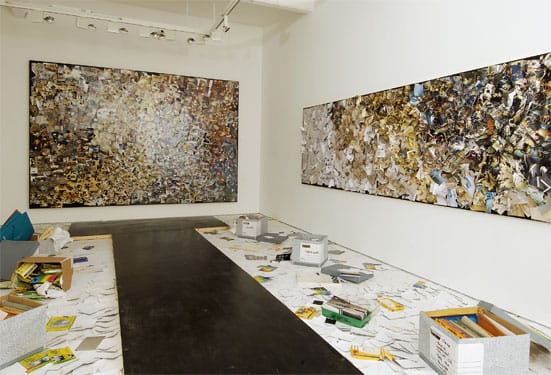
Immerses herself in waste, reclaiming unwanted and rejected items...converts disorder into order and ugliness into beauty.

Liam Gillick - modernist design, modernity, colour, light, structure


Jeff Koons - banality, pop, indulgence, advertising, commodity culture, sexual desire, guilty pleasures


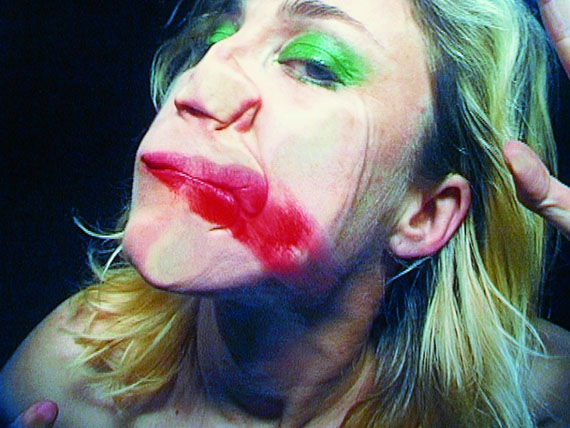
Pipilotti Rist - risks vulgarity, unconventional version of beauty, aesthetics of suspicion, discovering itself performatively, finding things beautiful or finding a way of presenting things as beautiful.


"it would be wrong to suggest that the contemporary politics of beauty leads towards drab or clumsy art."
"beauty is not obliterated by the aesthetics of suspicion but it is expanded, twisted, shifted and split."
"if aesthetics is permformed in the way that gender is, then beauty exists at the tense intersection of the individual and society, with the individual neither fully subsumed nor fully free from social norms and cultural hierarchies."
"Beauty - like masculine, feminine or queer positions - is not something given but something that we do and something that we change."
"the controversy of beauty is rooted in the tension between individual and society that is endemic to modern capitalism" 


The Everyday: Seminar Week 5

Next 2 weeks tutorials. First of two sets of tutorials. ELLIE BRINE 10:50 27th October
What kind of critical texts and themes interest you most and link to what your doing in your studios. Developing a body of research with relevant artists materials processes. Research that involves thinking about critical texts, and perspectives. Helps situate what your doing in your studio. Building up a portfolio of images as well as texts. Start doing short bits of writing in response to reading. 
Whitechapel documents of contemporary art - books good sources of reading critical texts. The sublime. Painting. Beauty. Likely one will be relevant to practice. Focus on contemporary art.
Look at texts from all eras, main link might be contemporary but how was that derived where it has come from. 
Choose same subject as studio practice, don't need to do loads of different research for presentation, studio work, and text. Keep it all interlinked.
Look at around 2/3/4 case studies. 
Use images when talking about anything in detail. Having an image means you don't have to visually describe the work. 
Looking at an aspect of contemporary art practice. Theme has to link to own studio work that you feel is a contemporary issue. Each practice straddles more than just one concern. Essay looks at only one. Essay is not meant to sum up your practice. Meant to emerge from practice. Is there a critical one or more theme that is important for your work? Aesthetics and the body - used to be highly argued and discussed, not so much anymore.
Not one but two or three ideas that interlink. What you'll end up doing is explore several adjacent and complementary areas but something that sticks out and links them that you will look at in the essay.
Gallery: what you have done, intentions, how it relates to critical ideas and contemporary themes in fine art practice. Put up on the wall piece of artwork, talk to small audience for 5 mins. Text to accompany it. Text could be something detailed and complex - something like a mini extract from a piece of critical writing. Supports what your going to say, sort of thing someone might encounter in a gallery or museum. Might be brief. Leaflet, artist statement. Whatever you decide - Why that's an appropriate way of doing it. Press release. Leaflet. Standard. Other people, experiments or objects with text. 
Presentations are not assessed. Work leading up to it is even more important. Maybe the script is your leaflet and what you say is more engaging. Live event. About you delivering something. Tiny details like what your wearing and body language. Is it relevant? Extraordinarily long unit, masses of themes, masses of work. Result is a lot of different things going on - difficult. Single emerging studio project and single text. 

Continuation of lecture:
David lynch blue velvet - drift and collapse vision of the everyday happy and secure, domestic, identifiable, into the dark underbelly of that world.filmic version of reality, idealised. American culture seen through images no experience. More reassuring it is the more unsettling it will be hiding. 
How do we view the everyday? Working with the everyday - necessary, unable to cope without everyday. Most of us live lives with routine and repetition. Primary resource. Stability.
Do something you do everyday and observe yourself think about it when usually you wouldn't. Keep a diary about the experience. Eg Alan Kaprow, brushing teeth.
Familiarit of the everyday means the audience can relate to it. Gallery usually shows something unique, when showing something everyday and you understand and can relate to it. Comforting.


The Everyday: Physical and Virtual

The Everyday: Noticing, Making Nothing Happen and Hierarchies of the Mundane

directly engaged with like it or not. 
Judith: Anything to do with daily life? not that simple.
Beginings of modernity - paris 2nd part of 19th Century. Marx: alienation from the means from production, movement away from agriculture. Street scenes and cafe scenes began to become subject matters for art - at the time quite shocking. 
Ordinary, accidentally miraculous, popular culture, criticising status quo
City as a gendered space. 
'Everday' different everyday for men and women. Men allowed to roam streets 'own the streets' was able to stand and observe without being abused or threatened. Women, not allowed out on their own.
20th century - the everyday shifted from a mere description of ordinary elements in social life, to confronting the materiality and totality of contemporary culture.
Francis Alys: when you are walking you are opening your peripheral vision, being awake and aware.
Georges Peree, The Street, 1974 rules to being observent: 'observe the street from time to time, with some concern for the system perhaps.'... talks about date and time and weather and what you can see and what it means.
Photography of things in the street. Claudia Pilsl, Found Not Taken, 2014. banana skin with tyre track through it
What we think are public spaces (shopping centres) owned privately and can stop us if they so choose - anti homeless, spikes in entrances to stop sleeping. Milton Keynes no teenagers wearing hoodies in the mall.
Using domestic space as well as the communal space.
Use of domestic objects. Hair brush - collecting the hair out of it (Halloum?)
Archiving the everday. Collecting objects of the everyday.

Krystof: The Uncanny

how an emersion in the everyday leads us to something profoundly troubling. Familiarity with the everyday leads to alienation. Notion of the uncanny. anxiety of the everyday. Freud's text: uncanny is something to do with anxiety and fear. moments where something we expect to be ordinary, familiar enviornment or experience, flips from being reassuring to something surprising or upsetting. 21st centurey focuses on things entirely farmilar to us, strike us as being dsrupted. Disruptions, disturbences, abstractions. Mike Kelley - own farmilar childhood memories and associated objects have this kind of dual fascination and repulsion element about them. Photographs of familar objects, become strange and anxiety - Soft toys too loved, distorted. 
Freud: trying to pind own what consitutes to the uncanny, keeps piling on lists of new things that mighty fit into this catagory of uncanniess.
Frued: to do with literature. Looking at stories - the sand man. The uncanny above allis the return of the repressed. Asurgence??? of something wre have known all along. Explores the german term for the uncanny - defined with references - unheimlich. heimlich - homely, domestic, things that belong at home. also means something to do with secret. Un-homely, un-secret - secret revealed. Artists looking at perfectly ordinary things that become unexpected and grab our attention. 
Freuds notion of the uncanny - strangness within ourselves. our anxiety of things we are producing ourselves. 
Genres of objects and spaces, familiar but anxiety and strange. Anxieties to do with mortality, scared of death. Other kinds of strange experiences in terms of the body - doubling - a mirror creates a double space - twins.
Located within built, urban, and domestic spaces. Artists interested in exploring the idea of the home being a place that ought to reassure us but also makes us anxious.
Liminal space - crossing a thereshold.
correct ness, institutions, construction of self-hood in infancy begin to get distrubed. Overlooked, tiny detail that pricks the reality of the everyday into a black hole. Brassai, Involuntary Sculptures, 1933. Not rational and logical activities but distrubamce in order. 
Surrealsits - objective chance. 
If we look at our own bodies for a long period of time or in a different way, they become unfarmilar and create anxieties. 
Disrupt what ought to be controlled environment to something strange. 

Monday, 19 October 2015

Plato

Following my research into Immanuel Kant, I considered other philosophers who have written about aesthetics in relation to art - Plato

https://artlitandideas.wikispaces.com/Plato%27s+Aesthetics


Tuesday, 13 October 2015

Psychoanalysis Seminar

Absence

and ability to affect 

Going on underneath the surface. His model of the mind: concious mind, social situations link to dreams. Dark pit of unconcious. As scientist look at what's going on underneath. Anxieties and desires.
Dream is processing our awake life. Or process of what hapend the day before or stretching right back to your childhood. Dream affects following day.
Work of dreams manipulating ideas adm moving them around looking at them in different ways. Collapsing together ideas that shouldn't be in the same place.
Crude, clumsy way of looking at symbolism. If you see a penis shape and think it's a oenis you must have a subconscious obsession
Dali: anxieties around sexuality. Upfront about it. Read Freud, interpretation of dreams etc. not an accident, kind of deliberate. 
The talking cure: free associating. Hypnosis techniques. What happens when they start to speak without control.
Freud's analysis, complicated and very specific, why is his analysis any more valuable than anyone else.
Art nouveau and architecture: gaudis architecture in Barcelona.
Interested in stuff that is outmoded and out of date. These days live in a culture of ever changing, quick pace, nothing is ever out of date anymore, clothes coming back in, art always reproduced and reworked.
Spontaneity.
Freud interested in Art and literature of the past, not contemporary. Sexuality, anxiety. Everyday objects
Klimt and Shiele looking at sexuality. Problematic in contemporary environment. Shiele imprisoned for expression of sexuality through art.
Locate everyday moments where unconcious, anxiety, comes out. Not just in us but objects and spaces. Paris: art nouveau design metropolitan. Extraordinary designs, inspired by plants, even praying mantis. Even sexuality 
Fetishism of objects at one level ascribing values to objects that they shouldn't have. Over valuing them. Sacred practices, sexual obsession with materials. Comes about when little boys realise (most likely mothers) women don't have penises. Profound anxiety of the possibility of being castrated. Transfer their gaze to other things where their sexuality and gender may be questioned.
Embroiled in tensions of anxiety. 
The dynamics of creation: Freudian analysis of Van Gogh - oil paints - traditional outlet for anal impulses. Messiness. Smells. Hands as a brush freely.
Reduce a really complex intricate set of activities and thought processes to a single purpose. 
Artist playing with cliche: Paul McCarthy film called painter.

Object:
Objects from childhood. About the sound and touch of it rather than visual 
Nothing is coincidence, objectiv chance. The image that comes out is a subconscious you just haven't worked it out yet.
Cassette tape- unconsciously packed. Memories.